Judicial Custody Vs Police Custody
Difference between Judicial Custody and Police Custody
3. In judicial custody, the accused is kept in jail. In the police custody, the accused stays in the lockup for 24 hours unless he/ she is proven innocent. 4. The judicial custody can be extended till 15 days. On the other hand, police custody can be extended to 90 days depending upon the crime committed.
https://www.javatpoint.com/judicial-custody-vs-police-custody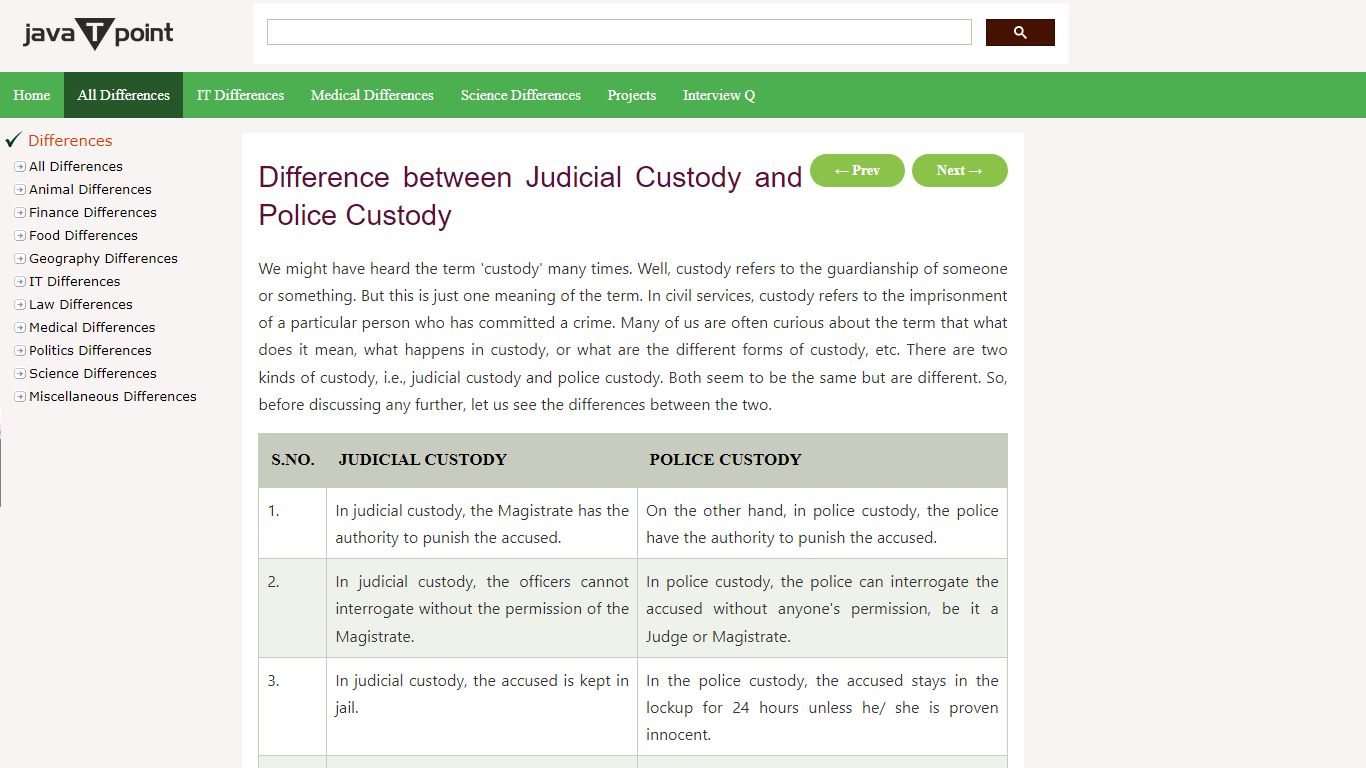
[In-depth] Police Custody vs Judicial Custody - IAS EXPRESS
In police custody, the accused has the right to legal counsel and the right to be informed. The police have to ensure these needs. In judicial custody, the accused is under the responsibility of the magistrate and his/her conduct is governed by the Prison Manual. Rights of the accused
https://www.iasexpress.net/article-police-custody-vs-judicial-custody-upsc/![[In-depth] Police Custody vs Judicial Custody - IAS EXPRESS](./screenshots/judicial-custody-vs-police-custody/1.jpg)
Judicial custody vs police custody - iPleaders
in judicial custody, the person is kept in jail as per the orders of the magistrate, and the investigation is done with his prior permission while in police custody, the person is kept in a police station’s cell for a maximum of 15 days and after that, if the magistrate thinks fit, he can extend the time period of custody and decide whether the …
https://blog.ipleaders.in/judicial-custody-vs-police-custody/
DIFFERENCE BETWEEN POLICE CUSTODY AND JUDICIAL CUSTODY
Police custody begins when a police officer arrests a suspect upon receiving a complaint or FIR. Whereas, the Judicial custody begins when the public prosecutor satisfies the court that for the purpose of the investigation, custody of such accused is necessary.
https://tripakshalitigation.com/difference-between-police-custody-and-judicial-custody/
Difference between Judicial Custody and Police Custody
Police detain the arrested person in lock-up and interrogate him/her to collect the necessary information. In judicial custody, the magistrate has the custody of the arrested person. During this custody, police can interrogate the arrested person only after taking the permission of the Magistrate. Landmark Judgments
https://lexforti.com/legal-news/judicial-police-custody/
What is difference between judicial custody and police custody?
When accused is sent to police custody, police will have the authority. Under judicial custody, Magistrate will have the custody. Another difference is that during police custody, police can interrogate the accused directly without any authority’s permission.
https://lawtimesjournal.in/what-is-difference-between-judicial-custody-and-police-custody/
Difference Between Police Custody and Judicial Custody
In police custody, the security is provided by the police, while in the case of judicial custody the magistrate provides the security. In police custody, the investigating authority can interrogate the accused, while in the case of judicial custody officer needs the approval of the court for questioning.
https://delhi-lawyers.in/difference-between-police-custody-judicial-custody
Difference Between Judicial Custody & Police Custody
Difference between Judicial Custody and Police Custody Police Custody means that police have the physical custody of the accused while Judicial Custody means an accused is in the custody of the concerned magistrate. In the former, they lodge the accused in a police station lockup while in the latter; it is the jail.
https://sociallawstoday.com/difference-between-judicial-custody-police-custody/
JUDICIAL CUSTODY AND POLICE CUSTODY – Lords of Law
Police custody means that the accused stays in the lock-up of a police station or in the custody of an investigating agency who is probing the concerned matter, whereas judicial custody means that the accused is lodged up in jail and is under the custody of the Magistrate. 2.
https://lordsoflaw.com/judicial-custody-and-police-custody/
What Is Judicial Custody and Police Custody Under CrPC - WritingLaw
In general, judicial custody is the custody of the magistrate. When the accused surrenders before the magistrate, the magistrate will either release the accused on bail or keep him in judicial custody or send him back to police custody. In the case of judicial custody, custody refers to jail. Jail can be Central Jail or State Jail.
https://www.writinglaw.com/judicial-and-police-custody-in-crpc/